
How do Plumbing Push Fittings Work in your Surrey Home?
If you've ever watched a plumber join two pipes without a blowtorch in sight, you've probably seen a push fitting at work. No flame, no solder, no fuss, just a firm push and the joint is made. It looks almost too simple, which is why Surrey homeowners often ask whether it's actually safe to rely on.
Quick take: push fittings are mechanical connectors that join pipes by pushing them into place rather than soldering or compressing them. They're widely used across hot and cold water and central heating in Surrey homes, but not every one suits every job. Below, we'll cover what these fittings are, how they work, what's inside one, how they're fitted properly, where they can and can't go, and the common problems worth knowing about.
Table of Contents
What Are Plumbing Push Fittings?
How Do Plumbing Push Fittings Work?
What Parts Make Up a Push Fit Plumbing Connector?
How to Install Plumbing Push Fittings Correctly
Where Can Plumbing Push Fittings Be Used?
Common Problems With Plumbing Push Fittings
What Are Plumbing Push Fittings?
In plain terms, a push fitting is a mechanical connector that lets a plumber make a watertight joint by pushing the pipe straight in. There's no soldering, no gluing, and no tightening a compression nut.
That said, "push fit" isn't one single product you can use anywhere. Some are designed for hot and cold domestic water plus central heating, others for underground cold-water service pipes, and some approvals only cover above-ground use unless stated otherwise. When we fit one in a Surrey home, we're matching the product to the pipe, the location, and the job at hand, not reaching for one generic part.
A fitting that's perfect for an exposed pipe under your kitchen sink might not suit a buried supply line in your garden. Getting that match right is part of doing the job properly.
How Do Plumbing Push Fittings Work?
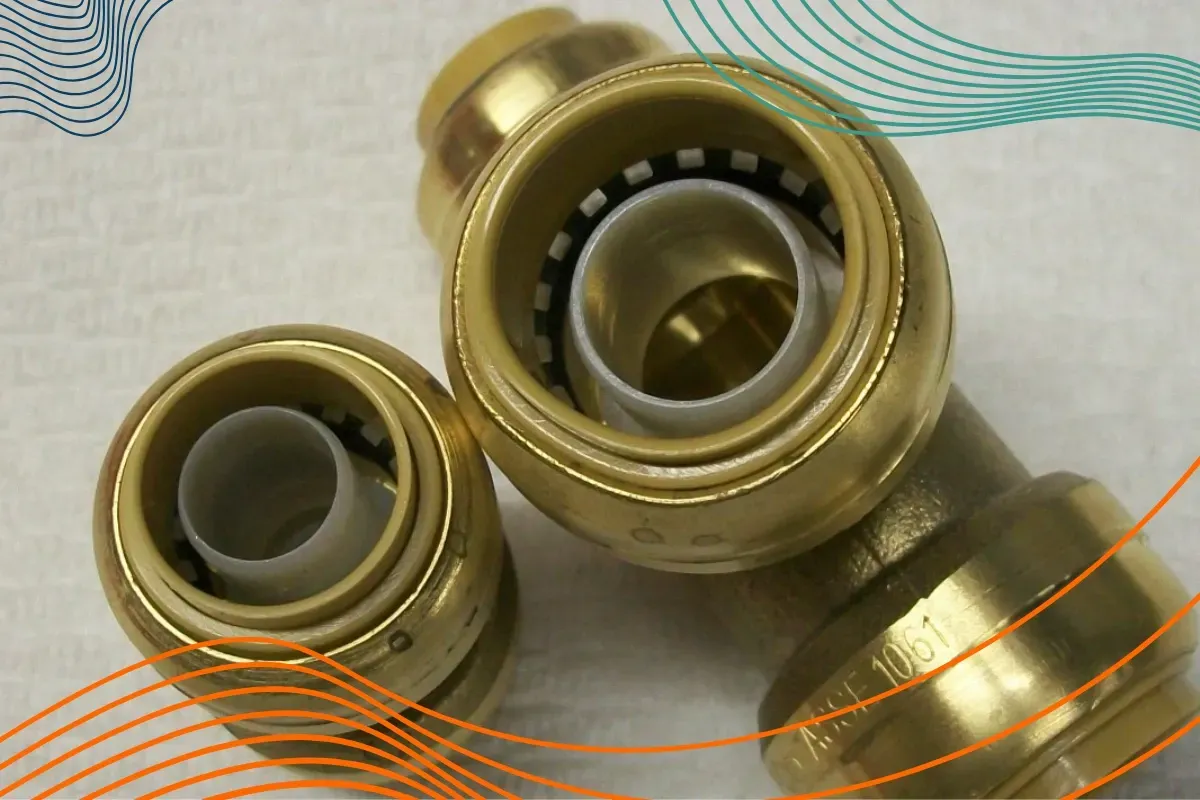
The mechanics behind a push fitting are simpler than they look, but cleverly engineered all the same. As the pipe is pushed in, it passes a release collar, then a grab ring with small stainless teeth that let the pipe in but resist it coming back out, then an O-ring that creates a permanent, watertight seal before it meets a stop confirming the pipe has gone in far enough.
In other words, one part of the fitting grips the pipe while another part seals it. The grab ring stops the pipe pulling back out, the O-ring keeps the water in, and the stop point gives a physical cue that the connection is complete. Some systems add a locking cap on top for extra rigidity, particularly useful on plastic pipe.
It's a neat bit of design: two separate jobs, gripping and sealing, handled by two separate parts working together to give a joint that holds firm under everyday water pressure without a single drop of solder.
What Parts Make Up a Push Fit Plumbing Connector?
Open up a push fitting and you'll generally find five core parts: the body, the release collar (sometimes called a collet), the stainless grab ring, the O-ring seal, and the tube stop. The body houses the joint, the collet controls how the pipe goes in and (on demountable fittings) how it comes back out, the grab ring provides the grip, the O-ring forms the seal, and the tube stop confirms full depth.
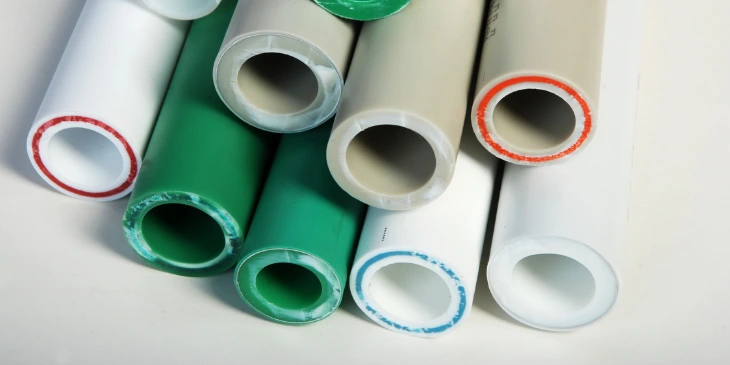
On many plastic pipe installations, you'll also need a pipe insert (sometimes called a stiffener or liner), which sits inside the pipe end to stop it collapsing and helps the seal form properly. Some systems use a twist-and-lock cap as an added layer of security.
Inserts aren't universal across every product. They're required on many plastic pipe systems used in Surrey homes, but the exact design varies between manufacturers, and that's one of those small details separating a tidy, leak-free joint from a problem waiting to happen.
How to Install Plumbing Push Fittings Correctly
Fitting a push connector properly comes down to a handful of steps, done in the right order. Choose the correct fitting for the job and pipe material. Cut the pipe cleanly and squarely, ideally with proper pipe cutters rather than a hacksaw. Deburr and clean the cut end so there's nothing to damage the seal. Fit the correct insert if the system calls for one, push the pipe fully home to the stop, lock the fitting if it has a locking feature, then test under normal pressure.
Most poor connections trace back to skipping a step: a pipe that isn't cut square, an insert not pushed all the way in, or a pipe that hasn't reached full depth. Scratches or debris on the pipe cause trouble too, since they stop the seal forming cleanly.
There's more to a compliant installation than the fitting itself, though. Water fittings in England and Wales need to be installed in a workmanlike manner under the Water Regulations, and concealed pipework in walls should have as few joints as possible, run through a proper chase, duct, or void, be clipped to avoid stress and water hammer, and be insulated where needed. This is exactly the kind of detail our Plumbing Surrey engineers check on every job, whether we're working in a home near Reigate or further out across the county.
Where Can Plumbing Push Fittings Be Used?
In most Surrey homes, push fittings are used above ground on hot and cold water systems and central heating, and many are compatible with copper, PEX, and polybutylene pipe. Compatibility depends on the specific product though, since approvals are tied to named pipe types, pressures, and temperatures. We never assume one suits every pipe; we check the specification for the job in front of us.
Below-ground use needs more care. Guidance on underground pipework says it should be suitable for that environment specifically, with joints kept to a minimum. That said, systems built for underground cold-water mains do exist, so it isn't a blanket no, it just means the product has to be right for buried use.
Concealed locations, like pipework hidden behind a stud wall or under a floor, sit somewhere in between. It's allowed, but joints should be minimised and access left for any fitting that might need maintenance later. Our approach is the same across the county: use the right fitting for the job, and plan the run so nothing important ends up buried with no way to reach it.
Common Problems With Plumbing Push Fittings
Most problems come down to installation, not the fitting itself. Badly cut pipe, poor deburring, dirt or scratches on the sealing surface, a pipe that hasn't gone in fully, or the wrong fitting for the job are the repeat offenders behind a leak. None of these are mysterious flaws in the concept; they're avoidable mistakes from rushing a step.
Concealed joints carry a bit of extra risk too. Joints hidden behind walls or floors are more likely to lose their integrity over time, which is exactly why minimising hidden joints and keeping access matters so much. It doesn't mean concealed fittings are off the table; it means the installation needs planning with that risk in mind.
One more point worth knowing, especially heading into a Surrey winter: frozen pipes can burst, and that's not unique to push fittings at all. It's a risk for any plumbing system once water freezes and expands beyond what the pipework can handle. If you're ever unsure whether yours is protected, our team can take a look and put your mind at ease.
Final Thoughts on Plumbing Push Fittings
The strongest, most honest position we can take on push fittings is this: they're reliable mechanical connectors when they're the correct type for the job, paired with compatible pipe, and installed exactly as they should be. We'd never tell a customer that one push fitting works everywhere, because that isn't accurate. What the evidence does support is that push fittings are fast, flame-free, and technically sound, provided they're chosen and fitted within the proper rules.
A push fitting works because a grip mechanism and a sealing system are engineered to work together, and because the installation around it, the pipe material, the location, the access, has to be right too. If you'd like a professional opinion on a push fitting in your home, get in touch with us and we'll happily take a look.
Plumbing Push Fittings FAQs
Are plumbing push fittings compliant in the UK?
They can be, provided the fitting meets the relevant Water Regulations and the proper approval route for that product. Compliance is about the specific product, not the push-fit concept as a whole.
Do push fittings work on both copper and plastic pipe?
Often yes, but only when the specific fitting states it. Compatibility is tied to named pipe materials and standards, so it's worth checking before you assume.
Do you need pipe inserts with push fittings?
For many plastic pipe systems, yes. Inserts keep the pipe end round and support a leak-tight seal. The exact requirement depends on the product and pipe material involved.
Can push fittings be removed and reused?
Some can, particularly demountable designs that allow refurbishment with replacement parts. Reuse is product-specific rather than a guarantee across every fitting.
Can push fittings be hidden behind walls or under floors?
Potentially, yes, but joints should be kept to a minimum and access left for any fitting that might need future maintenance.
Can push fittings be buried underground?
Only where the fitting and joining method are specifically suitable for below-ground use. Separate underground systems exist for cold-water mains, but standard above-ground fittings aren't right for buried pipework.
What usually causes a push fitting to leak?
Poor pipe preparation is the most common cause: a pipe that wasn't cut square, wasn't deburred, was scratched or dirty, or wasn't pushed in fully. Leaks are almost always an installation issue rather than a flaw in the fitting itself.
Whatever the job, our plumbers across Guildford, Woking, Sutton, Epsom, Camberley, Farnham, Dorking, and Redhill know push fittings inside out. Find out more about us or get in touch for steady, reliable plumbing wherever you are in Surrey.
